Friday, September 28, 2007
Exploring Quito
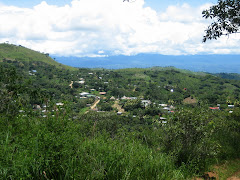
Quito is surrounded by mountains. In the morning, before the clouds roll in, I can see the snow-covered summit of Volcan Cayambe outside of my room. On a clear day, you can also see the Volcan Cotopaxi (furthest point from the center of the earth) and others whose names I can’t remember. Because Quito’s airport is located in the middle of the city, there are few tall buildings. I hope it stays that way after the new airport is constructed outside of Quito. There are several breath-taking views of the city and the first I had is known as the deadliest, according to my Lonely Planet guidebook. I finally visited the historic center of Quito, which is a treasure of colonial architecture. It takes more than a day to see all the sites, which are mainly churches and museums. Looking at my map, I decided to check out the Basilica del Voto Nacional first. Gothic and imposing, I was surprised to learn that it was built within the last century. A 15-minute uphill walk from the Grand Plaza, I fell in love with the colors and balconies surrounding me. Once inside the Basilica, I had an awesome view of the Centro, with the statue of La Virgen de Quito in front of me. Inside the main roof, across from the glass-stained window, was a rickety wooden footbridge that led to some upstairs outside. From there, were more (unsafe and very steep) stairs leading to a tower. I almost chickened out. I had to talk to myself out loud to calm my nerves. No joke. I already had a 360-degree view at the base of the tower but I wanted to climb to the top. Somehow, I made it up there. I was so proud I made a video. It really is a deadly ascent. Anyway, it was totally worth it. Afterwards, I climbed into the clock tower. Heading back towards the Grand Plaza, I stopped for a vegetarian buffet lunch (soup, main dish, and drink), which cost me a total of $1.50. Very cheap. On the topic of food, I have yet to try cuy (guinea pig) but I have definitely savored fritada (fried chunks of pork and hominy), all kinds of corn (popped and toasted). My host mom recently sent me ubre (cow’s breast) and lengua (cow’s tongue) for lunch. It was…different. But hey, it’s always good to try new things. Caldo de tronquit, anyone?

Thursday, September 27, 2007
A Chance Encounter
My host family lost a loved one yesterday. His name was Fernando Teran, one of the Diablito Teran Brothers famous for their music some thirty years back. Today I learned that most of my host dad’s siblings took part at some point in a musical ensemble that evolved from the Diablito Brothers. During the funeral mass, Miguel and the rest of his siblings sang 3 of Fernando’s favorite songs from the group. It was beautiful. And I’m a fan.
I left after paying my respects, and walked towards the NDI office to inquire about bus fares to Lima, Peru. On my way back, I passed by a small crowd of people and several police cars waiting outside a restaurant. I found out President Correa was having lunch inside. Excited, I decided to wait with everyone else. Ten minutes later, Mr. Correa walks out the door and everyone kind of pounces on him, me included. Most people were expressing their support for him and his movement in the election. I don’t have anything against the man; expect maybe his tendency to react inappropriately to criticism. Unfortunately, my camera battery died before I could take a picture with him. And for the man who said people just voted for a pretty smile, (post-election) it might just be.
I left after paying my respects, and walked towards the NDI office to inquire about bus fares to Lima, Peru. On my way back, I passed by a small crowd of people and several police cars waiting outside a restaurant. I found out President Correa was having lunch inside. Excited, I decided to wait with everyone else. Ten minutes later, Mr. Correa walks out the door and everyone kind of pounces on him, me included. Most people were expressing their support for him and his movement in the election. I don’t have anything against the man; expect maybe his tendency to react inappropriately to criticism. Unfortunately, my camera battery died before I could take a picture with him. And for the man who said people just voted for a pretty smile, (post-election) it might just be.
Tuesday, September 25, 2007
Political Encounters
I spent the whole day reading political news from the online archives of the major Ecuadorian newspaper El Comercio. I have to summarize the political developments of August and September for NDI’s monthly political reports. As exhausting as it was, I have fewer questions to ask my coworkers. Things are starting to make sense.
I finally met someone who is not going to vote pro-government in the upcoming election. He was my taxi driver on the way home. It was nice to hear a different perspective but I felt a little uneasy with his ideas. He lamented that the majority of Ecuadorians are lazy and prefer free promises. According to him, Correa has done nothing since he took office in January except hand out housing bonds and subsidies. My driver did agree, however, with Correa´s proposal for free education but under strict conditions. He said that only those students who work hard deserve free tuition. I found a parallel thought with affirmative action and programs that aid students from low-income families. I have my reservations. I mean it’s great that there are so many opportunities for minorities but not everyone deserves free resources. Especially when it goes to waste. I´ll end here.
I finally met someone who is not going to vote pro-government in the upcoming election. He was my taxi driver on the way home. It was nice to hear a different perspective but I felt a little uneasy with his ideas. He lamented that the majority of Ecuadorians are lazy and prefer free promises. According to him, Correa has done nothing since he took office in January except hand out housing bonds and subsidies. My driver did agree, however, with Correa´s proposal for free education but under strict conditions. He said that only those students who work hard deserve free tuition. I found a parallel thought with affirmative action and programs that aid students from low-income families. I have my reservations. I mean it’s great that there are so many opportunities for minorities but not everyone deserves free resources. Especially when it goes to waste. I´ll end here.
Monday, September 24, 2007
Political Chaos
I arrived at a time of significant change in Ecuadorian politics. On Sunday, September 30, Ecuador will elect a Constituent Assembly, consisting of 24 national, 100 provincial, and 6 international representatives, responsible for creating a new constitution (mind you, the 20th in the history of the republic). In a referendum held this past April, 85 percent of the population supported President Correa’s proposal for a Constituent Assembly with said task. Once the new constitution is written, another referendum will take place to approve it.
The number of candidates running in this campaign is overwhelming. Every party, movement, or alliance has a designated list number. In total, there are 3,229 candidates, distributed in 26 national lists, 428 provincial lists, and 44 lists from the exterior (6 international representatives will be elected to represent emigrants). And out of these 3,229 candidates, only 130 will be elected! The voting sheet itself is “like a blanket,” my host sister commented. On Election Day, each person must (voting is obligatory) select 24 national candidates on one sheet, and x number of candidates for their respective province (this number depends on the population of each province). There are 23 provinces in the country. People con vote “a la plancha” (drawing a vertical line down one party list) or across party lines. This is a very complicated and inefficient election process because of the system being used and because there is little information on the candidates and proposals of each party. Add existing clientalism and now my head hurts. NDI has been in Ecuador for the past year trying to help improve political dialogue and promote democratic practices within political parties (NDI also had a presence in 2002 when it helped create Participacion Cuidadania “Citizen Participation,” a citizen-formed group that helps monitor elections). NDI recently organized five forums in five cities around the country, in which citizens expressed their opinions of political parties and their representatives. The results were distressing. Frustration and resignation. NDI, in turn, has advised different political parties on how to become more transparent and thereby gain the trust and support of the populace. For my first task, I listened to a couple of these forums and summarized candidates’ key proposals. A comparative table will be published to better inform the citizenry of the reforms and ideas considered by the major parties. I hope this new Assembly will help Ecuador in the long run. On a final note, I’m glad to be an American.
The number of candidates running in this campaign is overwhelming. Every party, movement, or alliance has a designated list number. In total, there are 3,229 candidates, distributed in 26 national lists, 428 provincial lists, and 44 lists from the exterior (6 international representatives will be elected to represent emigrants). And out of these 3,229 candidates, only 130 will be elected! The voting sheet itself is “like a blanket,” my host sister commented. On Election Day, each person must (voting is obligatory) select 24 national candidates on one sheet, and x number of candidates for their respective province (this number depends on the population of each province). There are 23 provinces in the country. People con vote “a la plancha” (drawing a vertical line down one party list) or across party lines. This is a very complicated and inefficient election process because of the system being used and because there is little information on the candidates and proposals of each party. Add existing clientalism and now my head hurts. NDI has been in Ecuador for the past year trying to help improve political dialogue and promote democratic practices within political parties (NDI also had a presence in 2002 when it helped create Participacion Cuidadania “Citizen Participation,” a citizen-formed group that helps monitor elections). NDI recently organized five forums in five cities around the country, in which citizens expressed their opinions of political parties and their representatives. The results were distressing. Frustration and resignation. NDI, in turn, has advised different political parties on how to become more transparent and thereby gain the trust and support of the populace. For my first task, I listened to a couple of these forums and summarized candidates’ key proposals. A comparative table will be published to better inform the citizenry of the reforms and ideas considered by the major parties. I hope this new Assembly will help Ecuador in the long run. On a final note, I’m glad to be an American.
Sunday, September 23, 2007
Bienvenidos a Quito
I arrived in Quito on Friday, September 14, 2007. Even though my parents’ homeland borders the north of Ecuador, I really couldn’t picture where I was headed. After visiting Colombia, Peru, and Costa Rica, I’ve learned that geographical proximity and a common language do not guarantee a similar experience. At one point, Latin America did not seem foreign “enough” to consider in my travel plans. Once I traveled outside of Colombia, I saw that I was mistaken. But that word “enough” carried a new meaning in my subconscious, and it emerged when I applied to the Peace Corps earlier this year. Africa or the Middle East. Those were my regional preferences. When I found out that I would probably work in Latin America, I was upset because I wanted a completely foreign cultural experience. But more so, I was worried. I was worried about the reaction I would receive from others when I tell them where I might go. Great. A Latina in Latin America. How convenient and unchallenging. So this was my problem. Always has been. I care too much about what others think. Thank God, I’m over that. In the end, I want to do good and what better way than utilizing my skills and experience. I shouldn’t be too picky – this is a need-based program. I’ll go where I’m needed and where I can help out the most. So I’m no longer disappointed, I’m no longer embarrassed to say that this is where I may be going. Because Latin America cannot be described as a single entity and I’ve stopped caring that others may think that I am going to have a less meaningful or easier experience. Excuse my self-motivating speech but it does serve as a piece of advice. I almost excluded the seemingly familiar without actually experiencing it. And I almost let my selfish concerns cloud my life’s calling. In the end, one’s purpose is clear. Reaching it is a matter of blocking out unsubstantiated beliefs.
Back to Quito. I am here on a fall internship with the National Democratic Institute (NDI) for International Affairs, an NGO headquartered in Washington, DC with field offices around the world. I was skeptical at first – having studied political and social Arab thought in Egypt, I wasn’t sure if I wanted to work for an organization that promotes democracy at the expense of other systems, which may be ideal in certain situations, I can’t say for sure. What I do believe is that everyone should have the right to choose and live his or her own lifestyle freely. I accepted the offer with the hope that NDI is tolerant and flexible.
Back to Quito. I am here on a fall internship with the National Democratic Institute (NDI) for International Affairs, an NGO headquartered in Washington, DC with field offices around the world. I was skeptical at first – having studied political and social Arab thought in Egypt, I wasn’t sure if I wanted to work for an organization that promotes democracy at the expense of other systems, which may be ideal in certain situations, I can’t say for sure. What I do believe is that everyone should have the right to choose and live his or her own lifestyle freely. I accepted the offer with the hope that NDI is tolerant and flexible.
Subscribe to:
Posts (Atom)